Posted on August 26, 2008 in Books
 In The Return of Sherlock Holmes, Holmes and Watson commit a crime for good and even witness a greater crime, but do nothing. This collection has quite a few stories which highlights Sherlock Holmes as someone between the gray area of the official law and that of private matters. He is not amoral nor a vigilante, but he is not a police man; if law is broken, he is not obligated to reveal all. The stories in this are even more violent than before; I guess turn of the century allowed for Sir Arthur Conan Doyle to be more aggressive in his plots and characters.
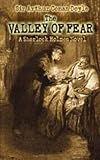 The Valley of Fear is the last of the novels, but not of the Holmes canon. It as violent as Return of Sherlock Holmes relative to the earlier stories. It is very similar to the first Holmes novel/story The Study of Scarlet. It is not in the same style as Hound of the Baskervilles (which is more gothic in feel), and like SoS, two sections, one of which does not have Holmes or Watson at all. It is more clever than the first novel though, and I liked parts of the plot and the characters. Like many, I do think these stories are better in short story form since the flashback section can drag on. The ending felt a bit anticlimactic to me though.
Posted on August 25, 2008 in Books
 My fourth Edith Wharton novel; I think she may be one of my favourite female classic novelists. Edith Wharton called Summer, her “hot Ethan.” Before reading this book, I thought I would like this more than EF because that novel was very bleak. I liked Charity in the first chapter and then grew indifferent to her; though, the plot had more interested and sympathetic to her plight towards the end. When it was first published in 1917, it was not a critical success though many see it as Wharton’s finest work. It is dramatic, but not in the way EF’s ending is because there is definitely a sense of realism to Charity’s predicament. It must have been controversial in its time, and like most of Wharton’s work, has themes of forbidden love and women who “fall” from grace in some way. All in all, I grew to appreciate the weight of the work by the ending however much I did not come to love the characters.
Posted on August 20, 2008 in Books
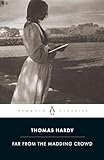 My third Hardy book which makes him my most read Victorian author I think. It’s not that I love him, but I keep being drawn to his books and not finding him irritating to read. I had heard good things about this one in particular. Nothing could be as tragic and as sad as Jude the Obscure. I liked Gabriel the character very much in this book. I thought there a few genuinely funny and romantic scenes in this novel. Bathsheba is naive young woman though; however beautiful and spirited she may be. For a woman who is independent and self-confident, she has no way of dealing with men. She always leads them on and it’s sad to watch her get entangled as is often the theme with the relationships and women in Hardy’s novels. I haven’t read Tess yet, but this is definitely my favourite Hardy novel of the three I have read so far. Having read both this, his first novel, and his last novel (Jude), I can appreciate Hardy’s progression as an author.
Posted on May 12, 2008 in Books
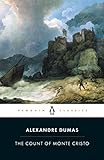 Alexandre Dumas’s epic tale of suffering, revenge, and providence. An enjoyable work with elements of the gothic and romanticism making it very much of its time. I think the plot is well executed for the most part even if I was bored of when the scenes were not about the Count in some way. All of these characters have lengthy backgrounds which link together wonderfully and with good planning on Dumas’s part. Another notable style is that most of the unseen action or past actions is told in dialogue. The work, at over 1200 pages, did not actually take that much time when I got down to it. It would have been better if I had read it in French because I realize that that some translations can vary greatly in terms of titles and interpretations. I just thought I would read this epic novel faster in English, but circumstances prevented that. When I reread it, it will be in French, and I will enjoy it again. By the way, I read the Penguin Classic edition translated by Robin Buss.
I liked most of the characters and appreciated the subtle characterizations. I did enjoy Dumas’s The Three Musketeers as well, and he can craft some interesting people. I really liked Edmond Dantes at the beginning and Abbe Faria. Dantes changes so drastically through the book, and once he becomes the Count completely, he is very mysterious and omnipresent. He does appear Godlike or preternatural, but it does make the book more interesting having such a superhuman character. He kind of reminds me of Batman and other morally ambiguous superheroes from graphic novels or comic books. I wish there was more of Mercédès who is often described as one of the most intelligent characters. I also really appreciate the mother-son relationship between her and Albert.
The ending was okay, and in some ways, I kind of like the ending of the 2002 movie adaptation more as it gives a more hopeful ending for a couple of the characters. I wish Mercédès got a better ending because while Dumas is not harsh to female characters as some authors from the nineteenth century can be, he is not generous either. Most of the “passive” females are given good characterizations (Mercédès, Valentine), and those that are active are usually immoral (Mme Danglars, Mme de Villefort) or odd (Eugenie). Mercédès’s fault also seems to lie in her passivity (girl can’t win) so her ending leaves me dissatisfied because she seems to be punished while she holds less blame and guilt than others. Aside from those who truly acted ill against Edmond, her suffering is the most complete. It’s a credit to her character that she takes it gracefully, but not to Dumas’s view of women especially shown in her last scene and her somewhat hopeless ending.
On a more positive note, the book was engaging for the most part, and I like the last line:
…all human wisdom is contained in two words- “wait” and “hope.”
Posted on May 3, 2008 in Books
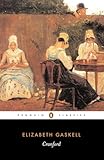 My first Elizabeth Gaskell novel. I have wanted to read Wives and Daughters and North and South for awhile, but somehow Cranford ended up being my first Gaskell. This novel is about the lives of the predominantly female, older population of the eponymous small town. There is little way in plot, and the tone is quiet and subdued like the setting of the book itself. It does have moments of amusement, satire, and cleverness that displays Gaskell’s ability as a writer. The vignettes are subtle and you can get so much from the characters from them. It is actually a good social portrait of England in the early mid-19th century. Many of the stories are based on actual events from Gaskell’s childhood. I would not recommend it to everyone as it quite slow, but I found many of the moments in the book touching. While the characters can be rather silly and gossipy, they are not vindictive for the most part, and stood by those they loved in the end. This novel worked on my sentimentality and sensitivity as you can tell. I liked it, but I understand that few people could get really into it.
The recent adaptation and mini series have already aired in the U. K., and PBS’s Masterpiece Theatre will begin its three week run of it tomorrow night. I have heard good things about it, and I wonder how they will shape the stories told in the novel. I do think that that with a cast led by Dame Judi Dench that the emotional aspect of the novel can be conveyed easily with the right script. I look forward to it, and will report back on it in a future blog post.
Posted on March 21, 2008 in Books
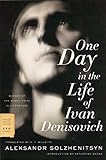 Aleksandr Solzhenitsyn’s short novel of a day in a Stalinist camp is a story of human dignity, survival and faith. The Stalinist prisons were not for criminals, and they attempted to break the wills of those in the camps. Ivan, or Shukhov as he is referred mostly in novel, is essentially a dignified and proud character. The characterization is subtle. He is from a peasant background and not particularly intellectual, religious, or rebellious, but there is a quiet dignity and pride about him. He is simple, and very much the beautiful every man:Â
And although he had strictly forbidden his wife to send anything even at Easter, and never went to look at the list on the post–except for some rich workmate–he sometimes found himself expecting somebody to come running and say: ‘Why don’t you go and get it, Shukhov? There’s a parcel for you.’ Nobody came running. As time went by, he had less and less to remind him of the village of Temgenyovo and his cottage home. Life in the camp kept him on the go from getting-up time to lights out. No time for brooding in the past.   Â
I liked this novel. I think it’s hard to pinpoint what’s particularly unique or special, but it is a straightforward and well told story. There seems to be such wonderful simplicity in the prose that gets across the character and the experience of camp life so well:
Shukhov’s idea of a happy evening was when they got back to the hut and didn’t find the mattresses turned upside down after a daytime search.
The book ends with a discussion of faith, religion and spirituality which is part of the survival of the camp. In his own way, Shukhov is spiritual in his actions and the way he carries himself. He has hope after all:
For a little while Shukhov forgot all his grievances, forgot that his sentence was long, that the day was long, that once again there would be no Sunday. For the moment he had only one thought: We shall survive. We shall survive it all. God willing, we’ll see the end of it.
Posted on January 28, 2008 in Books
 Published in 1818, Mary Shelley’s novel is styled with Romanticism (the descriptions and prose), Gothic (atmosphere and setting), and Horror (story and plot). At first I felt pity for the Frankenstein monster, but the story did give way to horror. I was not scared so much as fascinated by the way the death and violence unfolded. The set up of the novel is interesting too because there is a lot of characters telling each other stories: Victor Frankenstein telling his story to the narrator Walton, and the monster telling Frankenstein of his own story early on. The monster is really eloquent due to his readings of classic works. In the film versions, I think they dumb his rhetoric considerably. I think this is a testament to the time because everyone just spoke elegantly compared to now. The character of Victor is introduced as this broken but noble man, and as you read his story, the huge mistake in his life becomes him. He goes from being just a solitary, content young man to someone full of despair, self-pity, and misanthropy. The character is best seen at the beginning and at the end when he has accepted his mistakes and actions. There are few themes that can be read into this story. The references to Paradise Lost made me consider the idea of inheritance of the earth and who has more right? The monster says, “You are my creator, but I am your master; -obey!” Does Adam do unto the Earth because he is created to inhabit it? Does Lucifer have rights to rebel once he is created? Once we create, what are our responsibilities and what is that in which we’ve made? The novel did ask questions about the limits of man in science and technology. A quick and enjoyable classic.
Posted on December 27, 2007 in Movies
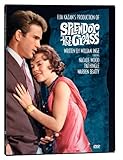 I confess that I did not actually see the end of this movie, but I saw most of the movie. The ending was not a surprise when I found out about it. Like most Elia Kazan movies from that era, there is a lot of angst. As for the acting, Warren Beatty is hot in his first role and of the three Natalie Wood films I have seen, this is probably her best work. I think Deannie’s (Wood) descent into madness/nervous breakdown is fastening as is the film’s take on late 1920’s sexuality and young love from a 1961 perspective. It is outdated in some ways, but I think many of the themes are still very relevant such as the Madonna/Whore complex which is explored. I wonder about how it was received at the time because even watching it in a less conservative time, some of the scenes were very sad in the treatment of women. Bud’s (Beatty) sister’s portrayal as a girl who only boys talk to in the dark was annoying, but the movie pushed the point home about how far she would go. Her last scene is almost lurid in its depiction of “the other type of girl”. The constant idea for men to seek these other girls, use them, but marry a nice girl like Deannie. While she must remain pure as that is what good girls are for, and “nice girls” don’t have sexual urges. It does seem outdated for Deannie to go mad from a broken heart, but I think if you consider the pressure she was under and her sensitive, young nature, it probably was not completely far fetched at the time. It is definitely a movie to consider gender roles and stereotypes then and now.
Posted on November 30, 2007 in Books
 By Vladmir Nabokov. 315p. I read this for the Second Chances challenge as I have already read Lolita. The books are different, this one being far more postmodernist than the latter. Though, Nabokov’s distinct style is present in both of these book. This work is very interesting, unique, and layered. I’m not going to say it was enjoyable at all times because I was confused at parts, amused at others, and bored intermittently. It has a lot of references and allusions, and there is more than one story to be read. It’s the type of book I would like to analyze in a classroom setting, but I’d probably be sick of it pretty quickly too as a result. It is funny in parts and full of twisted black humor and ironic, strange narration. The plot is told in a nonlinear way, and as a reader, it can be daunting going in to all this. The characters (or character really) are hard to grasp because of the narrative style, and pathos is not the point. There are many interpretations of the book itself. The prose is quite good, and it is interesting albeit perplexing. It is clearly not a book for everyone, and in my humble opinion, I don’t think the book should be taken too seriously. The book was interesting enough for me to continue and look forward to reading more Nabokov.
Posted on November 23, 2007 in Books
 By L. M. Montgomery. I missed on reading this Canadian classic when I was kid. I really wish I had. I’ve been fairly busy these past weeks (a couple more weeks and I’m on free), so it took me much longer than usual to finish such a book. It was a bit slow at first, and I wasn’t sure I had warmed to Anne, but I think she won me early on. I liked all the characters in this book. The dialogue was clever and observant, and while loquacious at times, Anne is such a great character. I think she should be the type of character children should read about. I love her curiosity, kindness, ambition, and dreaminess because I can be quite similar, and her love of the outdoors and of Green Gables. From the get-go, I really loved the characters of Marilla and Matthew. The book is also very Canadian in my humble opinion. Montgomery seems to really know her characters and their quirks. It’s no wonder this book is a classic. I’ve been a bit maudlin lately, and this book did make me shed a couple of tears. It started off slow, but I enjoyed the simple life of Anne at Green Gables. I look forward to reading the next book in the series.
Posted on November 9, 2007 in Books
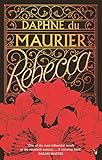 Daphne du Maurier was partially inspired by Jane Eyre when writing this book, so I could not help compare it to that book which I love. The characters are not exactly the same, but I enjoyed reading this book almost as much. It is very well written. I’m not someone who reads a lot gothic or mystery literature, but the atmosphere is almost perfect. Du Maurier is an excellent writer. The prose can be poetic. She’s good at dialogue especially with characterizations as well. Mrs. Danvers is incredibly creepy, de Winter is mysterious, and the nameless protagonist is relateable. While very naive at the beginning, it’s hard not to feel sympathetic for the character. She’s also been put in a very hard situation when they go back to Manderley. The use of the nameless protagonist device is something I encountered in Fight Club, so I was not put off by that. Though it did feel du Maurier was teasing the reader at the beginning with the fact we’d never find out. All in all, a very good read with lots of atmosphere, suspense, and just enough romance.
I did not read this book for awhile because I had seen the Alfred Hitchcock adaptation with Laurence Olivier and Joan Fontaine. I did not have the time to rewatch the film, but I remember liking it very much as I do most Hitchcock films, and I also like Olivier. I recommend it as a companion to the book.
Posted on June 28, 2007 in Movies
 This is at least the fifth adaptation of Jane Eyre that I have seen. In 2005, I saw almost every major JE adaptation including the BBC version with Samantha Morton and Ciarin Hinds, the 1940s Orson Welles version, the 1983 TV version with Timothy Dalton, and the Franco Zeffirelli version with William Hurt. The only other notable JE adaptations I have not seen are the 1973 TV version and the 1970 film version. Clearly, I love the book. Before watching this Masterpiece Theatre version, one of my favourite versions was the 1983 Timothy Dalton TV version. Yes, he is too conventionally handsome to be Mr Rochester, and the production values were practically nil, but my goodness was he good in it. He made it for me. I’m delighted to say that I love this Masterpiece version even more because it had good acting, better production values, and I found the adapted screenplay had just the right length. They cut just enough, and added the details to Jane and Mr Rochester’s relationship that I often felt lacking in other adaptations. I only remembered after that Toby Stephens was the Bond villain in Die Another Day, and he was Duke Orisno in Twelfth Night. I also completely forgot that his mother is Dame Maggie Smith. There are only fifty actors in Britain, and they tend to be related and star in Doctor Who or Harry Potter movies. I found it hard to remember TS’s roles because he was very much the part. He and Ruth Wilson had great chemistry, and it was romantic enough that I didn’t roll my eyes (though, I don’t think I would for this story). Wilson could be too pretty to be called plain, and she bears a striking resemblance to a friend of mine especially with her hair down. All in all, a very good adaptation, but I’ve come to expect good things from Masterpiece Theatre.