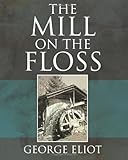
The Mill on the Floss by George Eliot

My first George Eliot novel. There has been one main reason why I haven’t read The Mill on the Floss yet. I saw most of the 1998 film adaptation starring Emily Watson some years ago. That was how I discovered this book; I had heard of Middlemarch, but not of this work until I saw the film. The plot stayed with me because I was perplexed by the ending so much I had to read literary criticism on it afterwards to understand it.

There are elements of tragedy in this novel. This is a coming of age novel at its core. It depicts both Tom and Maggie Tulliver through their childhoods, adolescence and adulthood through tragedy and hardships. The novel was published in 1860, but is set in the 1820s right after the ascension of the Prince Regent to George IV as King. The storytelling, mode and feeling is traditional and rural, but also Victorian in the way the people are changing. There is an unusual narration technique. The narrator is introduced as first person, but they are omniscient and not a character in the story. They act more like a third person narrator, but once in awhile, the author uses an “I” which reminds you that this is someone recounting a story.

From the beginning, Maggie is a girl that everyone except her father thinks must be kept in check. She adulates her brother, and they are close. Tom cares for her deeply and as children, they share the dream of living together happily. But oddly enough, he also thinks that when they live together, he needs to “punish her when she did wrong.” There is this cold, self-righteous aspect about Tom throughout the novel and how it contrasts to Maggie.

Maggie’s insatiable need to be loved and admired is the cause and result of many conflicts in the novel. This is something that the movie couldn’t display really that way and Eliot’s psychological insight gives.Maggie’s not wrong in this, and her love seems altruistic in a way. She really wants others to be happy and not hurt. It is also destructive though because she is very passionate and sensitive.

I liked most of Maggie’s scenes. Eliot is very good at setting the emotional tones of scenes, the awkwardness and the tensions. It’s wholly realistic. Most of the characters in the novel are not wholly good or bad. They have reasons for their actions however the reader may disagree or dislike it.

I got a sense that Eliot really knows her characters, especially Tom. He seems very consistent in the story. He grows up, he learns a few things, but like many people, there is a core person to him. For example, he remains very black and white, proud, and attuned to his own sense of justice. There are times when I or Maggie were annoyed with Tom, but then he would do something to make it right to her and all be in character. Also, many of the characters seem to be perceptive and the narrator describes their observations acutely e.g. Philip observing Stephen and Maggie.

While there is realism in the novel, there is the often occurring juxtaposition of Victorian dramas to put the realistic things with the dramatic. For example, Mr Tulliver’s revenge and feelings about Mr Wakem. Another example is Stephen’s feelings for Maggie and his sense of rejection and passion. They border slightly into the melodramatic in modern terms.

There are lots of moments in this novel where it feels life is slowed down and it’s introspective or reflective, but when it gets dramatic, it really is. The dialogue and insults are very sharp. The confrontational scenes are rather gripping.

While the novel is a coming of age story, I also feel it is very circuitous. Maggie and Tom’s relationship go through the same rhythms over and over until the end of the novel. While I feel both of them have endured and learned a lot from their hardships and tragedies through the novel, what they feel for each other and their own personalities do not really change all that much. It makes the ending understandable because Maggie’s only true love is that for Tom. It’s at least consistent. They come full circle by the end.

I also think the novel does a good job of discussing how romance and love is often a product of one’s own projection. What Maggie feels for Philip, Stephen, and even Tom is based off her own need and psychology. Similarly, these men project onto Maggie. Philip is also needy for affection. Stephen desires passion, rebellion, and romance. Tom sees Maggie as what he isn’t, but he loves Maggie the most in some ways because he knows her best. I think Philip was the most compatible to Maggie, but her affection for him isn’t romantic love.

I am glad to have finally read this book, and while it started off rather slow, I liked it in parts. Eliot is a meticulous writing who knows her characters so I look forward to reading more of her works.

Read June 13-17th 2012.

Sunday Salon

Happy Father’s Day! We had family time yesterday and now my dad wants to take his own day trip. Ha. I do a bit of solo travel too so I guess I take that away from him.

In reading news, I went to a book fair yesterday and got 19 books. I will make a post about all the book fair books I got in the last two weeks for tomorrow or Tuesday.

This week, I finished reading two books: Tess of the Urbervilles by Thomas Hardy and Friday’s Child by Georgette Heyer.

I started The Mill on the FLoss by George Eliot. My first of her works so it’s a long time coming especially with this book, but I’ll tackle that in the review. I will read most of it today which means I will probably finish it by the end of the day.

I could have read more this past week, but it’s been an unusually social and busy week for me. Also, in a weird turn of events, I have taken two jobs in the last week after a long drought without any work. I don’t know how it will affect my reading, but I hope not too much. I like to reserve Sundays for at least one book a week.

Has everyone planned their summer reading? I’ll keep with the classics for this summer I think.

On BTT this week:

Have you ever bought a book, started reading it and then realised you have already read it? If so, how far did you get? (Can you tell this happened to me for the first time ever this week!?!)

I am not sure, but this has happened maybe once? I think it happened with a children’s book since I had read it when I was young and again when I was older.

I am asking myself more than ever if I have read certain books. Mostly poetry and sometimes plays live in this blind spot. Also, I tend to watch a lot of adaptations of books such as TV shows and movies. I try to avoid these until I read the book, unless it’s a book I don’t think I want to read.

The good thing about me is that I am a list maker. This blog was also created in part to track my reading. I also have lists of all the books I have read since 2002. I keep one for movies to. So if I am not sure about a book, I just search for it!

Friday's Child

I did not enjoy reading this. The characters became too annoying and I became too indifferent.

I found Viscount Sherry to be a snot for much of the novel. He cautions his wife: “If you don’t take care, Kitten, you’ll have people saying you’re bookish.” His dialogue was over the top too. I know a lot of people like the over the top nature of Heyer’s characters, and it doesn’t always work for me especially if the character seems to be dramatic for the sake of drama.

Hero/Kitten was good, but she was insipid at times. Typical of many of Heyer’s leads that are young, inexperienced and virginal. But I can only read about how annoying and without common sense a female character has. It just got worse and worse with Hero.

I did like Sherry’s friends and how they genuinely were fond of both Hero and Sherry to help them. Other than that, I didn’t really like most of the characters or the plot.

As I read the book waiting for it to be finished, I was glad there wasn’t another abduction. Well, I jumped the ship too soon because there was actually two! Argh.

I will still keep reading Heyer because I have enjoyed some of her novels. Also there is an addictive quality to her works. I keep reading to find the good novels. Personally, Friday’s Child was not that for me. I would not recommend it as the first Heyer novel to try, but I am aware other people love it. There is a lot of elements of classic Heyer in this novel.

Read June 11, 2012.

Tess of the d'Urbervilles

As I anticipated, this was a difficult read due to the tragic nature of the novel.

This was my fourth Hardy after Mayor of Casterbridge, Jude the Obscure and Far from the Maddening Crowd. While I don’t think I really loved any of these novels in the way I would reread them in the future, I did enjoy them. I appreciate Hardy’s realism in all of them. His characters seem grounded and certain situations they are placed seem true to life. A lot of them suffer because of society. They books are tinged with sadness. A lot of his characters go through rough and arduous times. While Hardy is not the most difficult to read, he is not easy because of the situations he often places his characters. His writings do tend to make you consider the characters and the society they inhabit.

Years ago, I had seen the last scenes from the 1998 TV adaptation of Tess staring Justine Waddell (adore her). This was purely by accident when flipping through TV channels. I also learned the summary of the book not long after. I avoided reading this novel for the longest time because I knew the plot and ending. When I began to read it, I had forgotten many of the finer details including the ending until just pages before it happened. It was still very sad to read though.

Tess of the d’Urbervilles has the subtitle A Pure Woman faithfully presented. I liked Tess; Hardy makes you feel for her. I really like Hardy’s female characters. They have a tendency to be independent and subversive, but oppressed by Victorian society values and mores. I find Hardy is sympathetic to women and even though he puts Tess through the ringer in this novel, he is actually giving an “impression” (his word in the preface). In this novel, Hardy explores the double standard of female and male sexuality in this book.

There are two men in Tess’s life which both ruin her in their own way. Alec is extremely smarmy, unctuous, lewd, and crude. I dreaded his scenes because he would continuously manipulate, exploit, and demoralise Tess. When he does take advantage of her, it’s awful for me as a woman, even though Hardy describes it obliquely and indirectly. It’s early on in the book too, but by that time, the reader feels for Tess. She is a victim of many things in this novel.

Later in the novel, when Alec tries to change, he seriously tells Tess to not tempt him. He says it is as if it is her fault that he is such a louse. He admits she is innocent and does not mean to do it, but he still seems to blame her for his shortcomings. It shows the hypocrisy of men and society can view the woman in these situations. He also persistently chases her even after she rejects him several times, but he is obsessed with mastering her. As an aside, I actually think some men don’t really believe when a woman says no. Maybe some women are playing hard to get, but at some point, No really does mean No.

On the other side, there is Angel Clare. Now that is a character name! I think Angel is callow and his own plot shows progression and his own wrong thinking. His wronging of Tess is somewhat understandable in light of his naivety, but it showcases how he is a man of his time as well. He is so educated that he builds Tess up to this mythic ideal, but his warped view of her also breaks down his projection and their relationship. I do wonder about his future beyond the novel. At times, I think Angel was less of a viable character, but then again, Tess is the real star of the book.

The narrator implies that the events in Tess’s life is fatalistic. Hardy writes that he did not write the book as an “argument”. There is an implication that Tess’s lineage from the ill fated d’Urbervilles sealed her fate, but I also think her powerlessness had something to do with it. She did her best to improve on her life, but was thwarted by her own circumstances and by both men. She is so broken down by all that happens by the end of the novel. It’s a struggle for her and for the reader, and the ending is a relief for both her and us.

The prose is well written. Hardy is one of the best writers of the pastoral and ruralism. He places emphasis on nature in his character’s lives and in the settings and descriptions. He is a Victorian, but he has a lot of the themes of the modernists too. Also, he was a writer of both prose and verse. It is not a surprise that he gave up novels altogether and wrote only verse later in his life.

In conclusion, I really liked this book when I read, but I won’t ever reread it if I can help it. I think it’s thought provoking especially if you are a woman. I rank it with Jude the Obscure (also a supremely depressing read) as one of the best of Hardy’s works. Incidentally, this book review is one of the longest I have ever written for a blog.

Read June 10th, 2012.

https://images-na.ssl-images-amazon.com/images/I/51GggmNbXyL._SL160_.jpg

Heyerathon continues! Yes, this is what I am calling my incessant reading of Heyer’s books. I requested a bunch from my library and they all came at once. I am trying to read them more or less in chronological order of when they were published, but I admit that I skipped Royal Escape. I don’t know when I will get around to reading that since I am busy with the Victorian Reading Challenge and the Classics Club.

This has a similar plot to A Civil Contract as they both marriages which begin of convenience. TCM is classic Heyer with misunderstandings, romance, and over the top characters.

I liked the female lead Horatia right away, but then she spent most of the novel acting ridiculous. She was at least true to her age of seventeen, but I had hoped she would have more in her head. At least she recovered some of her wits by the end.

I adored the male lead, Lord Rule. There wasn’t enough him. Honestly, I like him better than the Alistairs of These Old Shades and Devil’s Cub. There was one scene where I remarked, “Now this is a man!” I enjoyed his sense of humor. I liked that he could be tough when necessarily, but did not have a reputation as a rake to go with it because he was much more clever than that.

Lastly, I’m sick of reading how every female in the 17th century gets kidnapped. I think it’s unavoidable in most of Heyer’s novels. It does irk me every time because it’s a horrible reminder of how women were treated as chattel even when they were rich or married. It rankles.

This was a quick read, not one of my favourites, but I think with Lord Rule, I’ve found one my favourite Heyer leads.

Read June 7th 2012.

Sunday Salon

This week, I read two books. One was the Jungle Book and the other was Heyer’s The Convenient Marriage. The latter’s post was scheduled incorrectly and the review will be up tomorrow.

Today, I plan on starting and reading Hardy’s Tess of the d’Urbervilles. I’ve been wanting to read this book for a few years as I have liked Hardy though I do find a lot of his works difficult because of the tragedies he usually puts in the books. I feel Tess will probably be hard especially since it concerns women’s place in Victorian society.

After that, I will read another Heyer. For my next Classics Club and Victorian Challenge read, I will probably go with George Eliot’s Mill on the Floss. I have also been meaning to read this for years and semi-avoiding it since I saw the adaptation before I knew of the book.

In other book news, I went to used book fair on Wednesday and I plan on going to another one on Saturday. I didn’t do any used book shopping in 2011, and book blogging has me back on it. I’m excited by the one on Saturday because the last time I went a few years ago, I got lots of books. Hopefully the selection will be as good this year. I have already started a haul post since I want to share what I got.

That’s it for this Sunday. What are you reading today? I hope everyone has a good week. Happy reading!

This week on BTT:

Favorite secondary characters? (Note the plural)

This is difficult. There are a few novels where I like most of the characters including the Harry Potter series and the Golden Compass trilogy. I have a soft spot for Snape from Harry Potter.

I also tend to like the secondary characters in works of Shakespeare. They tend to get best lines.

I love the book Anna Karenina and Anna was fascinating, but my favourite characters from that book were Lenin and Kitty.

My favourite books are ones where I usually like most of the characters, and I can’t pick favourites exactly though I think young adult and children’s literature have the best secondary characters.

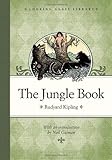
The Jungle Book

This edition of The Jungle Book includes an introduction from Neil Gaiman, and stories from both the first and second books. It features all the stories about Mowgli and one not with him.

I seemed to have missed out on reading this in my childhood. I got the feeling I started this when I was younger but never got around to finishing it. I still very much enjoy reading young adult and children’s books. I think I will keep reading them, and I hope to always find them enjoyable like I did this book.

I really liked all the characters in the Mowgli canon even Shere Khan the lame tiger. I do seem to appreciate stories about anthropomorphic characters though especially in young adult literature. Authors tend to imbue them with charm, innocence, but wisdom at the same time.

There were some good stories about life, death, and the nature of the world. It was sometimes sad as it can be with realistic stories. I think this is a good book about Man on earth and human’s relations to the environment and animals. A book like this is always good to remind us of what our role on this planet should or could be.

I think this a good read for all ages, and I look forward to reading them again.

Read June 4th 2012. This was the first book read for the Classics Club.

Escaflowne the movieEscaflowne: the movie or Escaflowne: Girl in Gaea (05-06 05 2012) – I am trying to remember if I watched this film before, and I don’t think I did. I did watch all of the anime in the 1990s though. It is probably one of my favourite animes in terms of how memorable it was for me. The visuals and soundtrack in this film are good, just like the anime was. Hitomi is a tad emo in this though. There were some weird monologues going on and a lot of rushed characterizations. Folkien was two dimensional and everyone kept talking about how sad they were. Still, this is a decent intro to the anime series in that it only makes you want to watch the anime again.


She's the ManShe’s the Man (23-24 05 2012) – Notably Rewatched. ALl the genderbending and crossdressing from the Heyer novels reminded me of this. I really like Twelfth Night so I watched this a couple years ago. This movie is cheesy but underrated. It has a cult following in a way. It is a feel good movie and is immensely rewatchable.

I only watched one new movie this month. I was taking a certification so I was in school for most of this month and my hobbies suffered. Still, I am watching less movies nowadays. I prioritize reading and knitting over films now. Furthermore, I tend to watch more tv shows. I think the quality of TV has actually improved over the years so I follow more shows.

I do still like watching movies, but I can live without watching too many. There is a difficult in that I hoard films so I have a large queue of unwatched movies.

Sunday Salon

This was my last week of the month long course I have been take. No books read this week and I doubt any today because I have to finish my last assignments today. Furthermore, I got very little sleep last night so I don’t think I have much energy to read today any way.

I will read later this week. While I have a whole stack of Georgette Heyer still in the queue, I will also read The Jungle Book by Rudyard Kipling for the Classics Club. If I have the chance, I will start
Tess of the Ubvervilles soon for Classics Club and the Victorian Reading Challenge. Thomas Hardy’s birthday was yesterday. I do like Hardy.

It will be good to read during the week again! In other news, I’ve been deleting the duplicates from my GoodReads account. Since about 2002, I’ve read roughly 720 new books (give or take maybe 50 books for a margin of error). That’s not a bad number. That means I’ve been averaging 70 books a year on average. So I just have to read over 70 books this year as part of my personal challenge.

How is everyone’s weekend? What are you reading?

Masqueraders

Another Heyer novel with cross dressing and gender bending; this time it features a brother and sister
who play sister and brother. The book also features the siblings’ love interests and their master manipulator father. This novel is set just after the Jacobite Rising and that features in the plot and the cautious atmosphere looking for rebels.

The premise is interesting. I do like my cross dressing plots, but this novel was a tad boring for most of the book. I liked the main characters, but maybe there wasn’t enough depth to them for me to really feel invested. I also couldn’t really get into the romances. Sir Anthony is intelligent and big, and that seems to be about it. It felt that there was wasted potential with the premise.

One thing that has been bothering about these novels is the frequent abductions of young females. How often did this happen in the eighteenth century? It seems like every month in these books.

I did like the ending though and it wasn’t a bad read by any means. Heyer usually has some nice touches in her characters and plot. I think the twists towards the end helped end this novel on a high note.

Read May 23-27, 2012.

<< previous posts || next posts >>