Posted on March 18, 2012 in Books
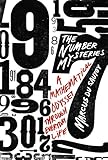
This is a book about math. I am not quite sure how to review it given my ineptitude in this subject.
In recent years, I’ve made more of an effort to read more math(s) and science books. My background is purely in the social sciences, and to be honest, I once failed high school math and almost failed math at least two other times too. The math and I are not best mates, but I know many people have this issue. I have quick arithmetic skills all things considered, but anything beyond basic calculation including graphing, statistics, algebra, calculus, etc is very difficult to impossible for me. I also did not do very well in Chemistry, Biology, or Economics (which I was required to take in undergrad). I never took physics though at least three of my close friends have Physics degrees.
I have a lot of respect for maths and the hard sciences. I am interested in them, but even reading these books, I find it hard to retain the information especially with physics and maths.
In this book, I understood some of it because the author tries to put it in layman’s terms.There are lots of interesting things in it about primes, shapes, randomness, codes, games, etc. I understood some of the facts, but when it got to the hard numbers and equations, it really felt the information goes in one ear and then out the other.
Does the book showcase the fun that is maths? Sure, but I still find it difficult to understand all the concepts in it. To be honest, the longer I read the book, the harder it was for me to understand as I grew more and more impatient with finishing it. My physics friend who tutors students in A Level maths recommended this book to me, but did admit that some of the stuff towards the end is a bit complicated. Though most of the book is intended for people unfamiliar with the subject.
I would recommend it though, but I don’t think I can fully appreciate it like some people.
No idea when I started this book. Finished reading March 16th, 2012.
Posted on September 3, 2008 in Books, Movies
 Aristocrats: Caroline, Emily, Louisa, and Sarah Lennox, 1740-1832 by Stella Tillyard is the biography of four high born sisters. As with many of the books I read, this languidly lay in the TBR for awhile. This one for almost a year, but I have quite forgotten where I read or learned about the books only observing that it seemed well criticised and popular enough for the BBC to make mini series on it. It is a thick history book around 450 pages hardcover and very in depth as it covers the lives of these four women. While I enjoy history immensely, I actually do read that many historical books, and to be honest, many of them are dry. This one was not only well researched, but Tillyard makes the prose feel, at times, as if one is reading a novel rather than a distant historical account. There are many academics who are readable and comprehensive, and there are many who are far from it. Tillyard is not only readable, but her writing is accessible to the public which is why this book is a bit of an oddity being very historical, biographical, and a best seller. As a result, one learns a lot about the lives of people in the UK and Ireland in the 18th century. It is not necessarily a page turner for everyone though, and I really only picked it up because I am interested in history, but you may not be curious if aristocrats, rich dead people, biographies, and English/Irish history are not your things. An interesting read none the less.
 This six episode BBC series which also aired on PBS Masterpiece in 1999. I had not heard of it until I knew of the book which goes to show you that the series is not the most excellent. I have seen better to be sure even in the British costume drama. I do not think it’s necessarily a bad series; it’s actually difficult to adapt because it is a true story. The adaptors were quite faithful, and I think as with most series of this type, the acting and cast make the most of it. I quite liked Geraldine Somerville as Emily; she is very attractive in it. I did not like the Emily voice over, and the portrayal of Caroline’s storyline left me feeling depressed. The portrayal of Sarah at the beginning was difficult to see though. All in all, I thought it okay because it was a bit slow, but it did not merit too much censure or negativity. I’d take the book any day though.
Posted on August 8, 2008 in Books
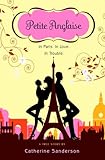 I have a bit of a history of reading expat memoirs, and France is a popular place for expats to write about. One of my favourite expat memoirs is Paris to the Moon. In fact, I think I’ve read more memoirs of living in Paris than any other. Which is to say probably a handful. I think it’s mostly a habit now that if I hear of a decently written memoir about living in France, I’ll read it. It’s very easy since many expats write about France very well and very easily. While I am an anglophile, it can easily be said I am a francophile as I am semi-fluent in French. Though the reason I picked up this book was not only because it was an expat memoir, I knew of Petite Anglaise, as with many people, through her blog. I read it first in 2005 or late 2004 (definitely before she left Mr. Frog). While I was never a regular reader or commentator on her blog, I remember reading several of the posts and comments alluded to in the book. Even in blog format, I admired her openness in writing for her life. While I have had personal blogs over time, my visitor page was never a smidge compared to hers nor have I had the relationship rollerocaster, I could not be as open as she was in the blog. It is funny reading the book with things you’ve read about online or in a blog. It seems to be another perspective, and indeed, Catherine Sanderson seems to differentiate herself and Petite. I enjoyed this memoir because the question is elicits in personal blogging. How much do we or should we reveal? Do a lot of us blog when we are unhappy as a creative and cathartic outlet? For me, it’s fairly true because for many years, this domain has hosted a more personal blog (which is still here, but not been updated for more than a half year) in which I detailed many years of anxiety and doubt. Overall, I like how this memoir posed these questions about online dating, personalities or public writing. I think Sanderson writes in a clear style and voice.
Posted on August 6, 2008 in Books
 My first David Sedaris book. It was very funny and a quick read; I think it only took me half a day of solid reading. I laughed out loud a few times, and I loved Sedaris’s style. There are quite a few essays in this, a couple on his childhood and youth, a few on living day to day, people, and one large one at the end on quitting smoking and moving to Japan for a couple months to accomplish it. One nifty thing was the following quotation: “There’s a store in London that sells travel guides alongside novels that place in this or that given country. The idea is that you’ll read the guide for facts and read the novel for atmosphere” Which is something I mentioned on the previous Sunday Salon and funnily enough, I am going to London. I thought this a fun read, and definitely right up my alley in terms of humor. I find things easily amusing and strange as Mr Sedaris does. I look forward to reading some of his other books and essays in the future.
Posted on July 8, 2008 in Books
 Bill Bryson’s memoir of growing up in 1950s Iowa. I have liked Bryson’s writing for many years and have devoured most of his travel writing. He is always funny, candid, and incredibly observant and insightful. He seems to do a good deal to research his books as well. While this is a memoir, there is commentary on the 1950s as a whole particularly in the US. Bryson admits that he his childhood was not particularly unique or traumatic and yet, as I usually do, he takes simple subjects and revels in the day to day life of being a child in a relatively prosperous and peaceful time. I enjoyed this quick memoir even if I did not live in the 1950s, but there are many moments that remind me of childhood in general. He captures the idiosyncratic nature of the whole time of our lives with his usual writing of his memories. A nice, light read.
Posted on June 21, 2008 in Books
 The Geography of Bliss: One Grumps’ Search for the Happiest Places in the World by Eric Weiner is his voyages for happiness and the meaning of it. He travels to ten countries finding how what makes us happy and what makes us miserable. The countries as follows in the book: The Netherlands, Switzerland, Bhutan, Qatar, Iceland, Moldova, Thailand, Great Britain, India, and America. The happiest place seems to be Iceland, and I found myself relating to and fascinated by the Icelandic approaches to life. The book is well researched and there are many discussions and threads on happiness, its relation to trust, envy, choices, productivity, society, individuality, altruism, spirituality, and more. There are lots of quotations from philosophers, writers, scientists, and the intriguing people he interviews. I noted many of them in my tumblr blog; I have a thing for quotes. It was insightful, amusing, and enlightening. As with many travel books, there were stories of many people of different walks of life and as a journalist, Weiner takes them all down deftly and expertly. Also like a journalist, he was personal without being overly so in the memoir portions of the book. I quite like this book, finding it thought provoking and something necessary to my own contemplations about what makes us happy or at least content. It is a fascinating topic, and mixed with the ideas of culture and geography, it can open ideas of how we all lead lives. I do not think it is a self-help book, but definitely consider it a more philosophical travelogue. Recommended.
Posted on June 17, 2008 in Books
 My favourite travel essay anthology series. Okay. The only travel essay anthology series that I read. Still, I’ve read every book in the series since 2002. I enjoy each one immensely. Some stories are more memorable than others, but each guest editor deftly chooses some gems and amazing stories from the lands afar. I love travel writing due to my incessant escapism so these stories are the best from periodicals and the like. In the 2007 edition guest edited by Susan Orlean, there is the story of Tokelau and its referendum for nation building in the South Pacific, Djibouti and its national addiction to khat, an idyllic walking holiday in the south of France, a particularly long article on mysterious and perplexing Libya, and more. This is not much of a review because I find that I consistently like each volume in the series which has humor, horror, romance, and travely self-discovery. I recommend the series as a whole.
Posted on June 7, 2008 in Beauty & Skincare, Books
 The Perfect Scent: A Year Inside the Perfume Industry in Paris and New York is a book with two stories on the creation of perfume. In NYC, Sarah Jessica Parker and Coty Int. launch SJP’s Lovely perfume. In France, newly crowned in-house Hermes perfumer Jean-Claude Ellena and Co. creates and launches Un Jardin Sur Le Nil for the luxury house. The author Chandler Burr is the scent critic for T: The New York Times Style Magazine with a background in economics and Asian studies, but seems very comfortable in this insular industry of chemistry and art. The book is a quick read at less than 300 pages, and quite a page turner since it switches seamlessly between the two stories of perfume creation that are so very different from the other, but so similar in the end. I did not know a lot about fragrances before reading the book, but I did have an interest. I always find it comfortable to read an informative nonfiction book to learn and be engaged. For example, I understand now that synthetics are actually better than naturals in fragrances, why American brand fragrances all smell the same, how one does pay for the art and not just the materials, and a host of other things. I was fascinated by the articulate Ellena. I think people who have a vague interest in the olfactory arts should read it as well as those interested in fashion/beauty as a whole especially from a business perspective. Not to mention the French parts of the books are so very French in tone; I wish Burr had written this book in French. He captures the Gallic culture very precisely as a fluent speaker. A light, informative nonfiction read.
Posted on May 17, 2008 in Books, Food
 The concept of the book was to go to more than two dozen countries, visiting several families and taking photos of their food life. It is the size of large coffee table book and has many photos taken by Peter Menzel with accompanying articles on the families written by his wife Faith D’Alusio. The book is cultural, historical, a cook book, and a book of international affairs just as much as it is book of photographs. It has stats about each of the countries: life expectancies, meat consumption, the prevalence of MacDonald’s, cigarette consumption, obesity, and so forth.
I read a lot of books about food. It has always been an interest of mine. I love it in many ways as it shapes cultures, history, time, economies, lives, science, and so much war. I would very much like to one day work in a job about or relating to food issues from nutrition to developmental programs to the overall importance of food production now. This book touches on food in so many ways. People often underestimate the vast change that happens in food and to our lives. It is especially important to understand what food to us is right now with rising food costs and food riots.
The introduction states that the book is not out to be political or judgmental of food choices, but as a documentary in the way food is changing. For better and more often, for the worse. Food (like land) has always been somehow political, but this showcases how important it is for us to be aware of the issues. This book looks at globalisation, conflict, drought, and climate change as a result. I recommend this book for insightful reading about different and changing lifestyles and as a look at our planet.
Posted on May 14, 2008 in Books
 Edited by Harvey Pekar, this first edition of The Best American Comics anthology showcases the variety of comics and visual storytelling available today. Many of the stories are very political which is understandable since comics has history of being subversive. Even more off the comics featured are based on autobiographical experiences or nonfictional accounts which seems to me the biggest movement in comics and graphic novels these days. The end of the book includes notes about the contributors and on the pieces in the book by the authors themselves. There are quite a few that did not stand out for me as it often happens in some anthologies, but many were well done, a couple extremely so, and one made me laugh out loud. Pekar wanted it to feature the best of the 2004-2005 time frame and allow old and new readers like to appreciate comics. I don’t think this would necessarily be the best introduction to the graphic storytelling medium, but it really does showcase the diversity of styles in the medium. It is short, and I would recommend reading the introductions after the comics themselves.
.
Posted on April 28, 2008 in Books, Food
 A memoir of Barbara Kingsolver and her family’s attempt of eat food produced by themselves or in their own Virgina neighborhood for a year. This is my first book of Kingsolver’s, and she is intelligible, funny, and educational in this book. I learned quite a lot about gardening, industrial and rural farming, and turkey sex among other things. Self-sufficiency in food has always interested me, so the idea of raising animals for one’s own consumption, making cheese, or having a fertile garden greatly appeals to me. I would highly recommend the book for people interested in changing their lifestyle and food choices to one that is more local and organic. The book has recipes, but it is not a diet book, nor is it preachy. They do provide information about the food industry and the world markets as result which can make you a better consumer in regards to food. This is a food memoir of a family, and there details of family dynamics, travels, and experiences in their new farm life. I particularly enjoyed Kingsolver’s attempts at turkey raising and her daughter’s Lily’s entrepreneurial venture into the egg business. Another enjoyable nonfiction book on food.
Posted on February 22, 2008 in Books, Travel
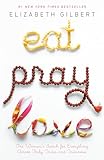 A memoir of looking for pleasure, devotional and the balance of the two in Italy, India, and Indonesia. I first started reading last spring/summer, but then I had to return it to the library. It was already a bestseller, but it’s only gotten more popular (as it was featured in Oprah) since then. Some people have been critical of the book for being self-absorbed. I’ve read a lot of travel books and memoirs, and they are all personal in one way or another. Travel is one of the ultimate self-confrontational and education experiences in life. Writing a memoir means evaluation of self, ideas, etc. I can understand why this book probably rubs some people the wrong way. Elizabeth Gilbert can be rather melodramatic writer. Yes, it can be amusing, but sometimes, the writing is seems affected and hammy especially in early chapters. Everything is pointed out, but not in an observant or subtle way. It got a lot better as the book progressed and she traveled more. As she seemed to learn more about life, spirituality, and other people, the book became a fun and enjoyable read. Partly because the author and I share similar interests in spirituality, and there are few things she tried in the book that I have been pondering myself. The book is not the best or most educational travel memoir book, and it’s very personal. Overall, it was a good read, but I understand why the narrative would not be everyone’s cup of tea.