House of Cards (March 25?-29, 2016) – A good season of the show. I enjoyed it. Maybe a bit more than the last. I love how the characters are fascinating, vulnerable, and vile at the same time. Claire’s mother was a great addition to it.

Cooked (March 29-April 3, 2016) – A Netflix documentary series based on Michael Pollan’s book Cooked. I have been more into food than ever lately if you’ve noticed so this was right up my valley especially the episodes about bread and fermentation. It was not the best documentary series I’ve seen about food, but it is a great companion to the book in many ways. I think most people interested in food would like it and definitely for those of us who have read the Pollan book.

This was the right spring time book for an Easter read. I’ve seen more than one adaptation of this book on TV and movies. I also think I read at the very least an adapted version of this as a kid.

I liked the transformation of spoiled and sour Mary into a kinder and more robust one. I was less interested in Colin and the move shifts more to him in the latter half. Dickon is a funny character too. I do genuinely like the kindness of the characters that Burnett writes about it here and in A Little Princess.

What I liked most about this book was that my hard cover was big and had lovely illustrations by Inga Moore. I think that was a big part of why I enjoyed the story as much as I did. As a child, I loved a similar style book of Peter Pan. It really makes a worthwhile reading experience when children’s books are presented this way.

Read March 27, 2016.

Sourdough

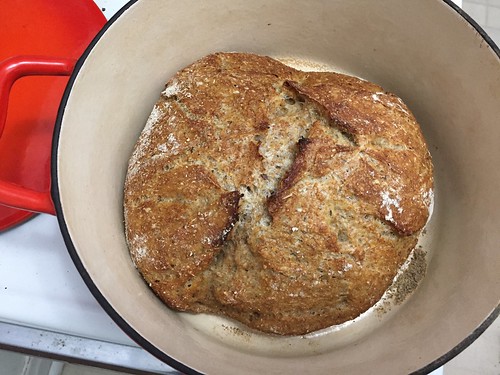
In 2012, I created my own sourdough starter from scratch. It used organic flours (rye, kamut, whole wheat, spelt) and distilled water. I kept the sourdough alive and tried to make sourdough bread half a dozen times. However, it was only mildly successful one time when I made a Olive Sourdough Fougasse. I basically gave up on sourdough until recently. It’s been a personal challenge for me as a baker. I put the sourdough starter in the fridge and would occasionally feed it, but it has lived in hibernation since 2013. In fact, I had a bit of a hard time reviving it when I took out for this experiment.

Currently, I feed my sourdough mostly with a mix of AP, whole wheat, and rye flours. I find rye flour really makes an active starter. I will also the starter with kamut or spelt if I have it on hand. I use distilled water some of the time, but I have been mixing it with cool boiled tap water. Luckily, I have access to one of the best municipal water systems in Canada.

A couple of months ago, a neighbor and I became friendly over our mutual love of food. She shared with me this no knead sourdough recipe from the Clever Carrot. She also gave me a loaf to try. The whole no-knead process and the many tips (love the water glass float taste) convinced me to try the recipe.

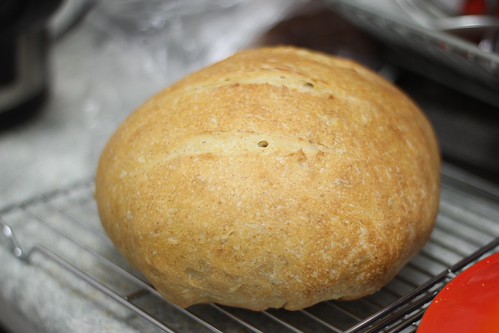
Why do I love sourdough? I do love the tangy taste of it. Second, it lasts longer than standard bread loaves. I do not consume a lot of bread. I make bread because I love to bake it, but rarely do I ever crave it. I am not a carbs person so a loaf of bread takes me a awhile consume. A standard 1kg loaf like the one below will take me on average 4-6 days. Loaves from commercial yeast including the other No Knead bread recipe I use get dry and hard within two days. This is why I always have to freeze those loaves, but with sourdough, they remain mostly soft in room temperature for days. I love that. Finally, I do believe sourdough is easier to digest and probably better for you.

Note: I use Canadian All Purpose flour which has higher gluten levels than standard American or British AP flours. I almost always used AP flour over bread flour for bread including all my previous Jim Lahey No Knead bread attempts. I bought bread flour for this experiment though. In the end, I feel AP is enough.

Continue reading →

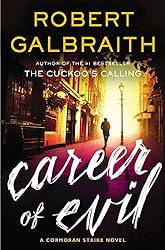
When this book was first released last October, reviewers noted how dark it was. Indeed, this book is very heavy in tone and creepyness. Much more so than the previous two books. Even though the second book had its strange oddities too. I found some of the chapters from the perspective of the villain hard to get through. Still, I finished this book in two evenings so it was not that bad.

The other minor quibble I have with this book is the relationship between Robin and Cormoran. The constant push and pull between them is getting tiring. It is not say that I either do or do not want them together, but the constant speculation in the book from all sorts of characters is overdone now. Secondly, I am finding Robin is a bit too perfect. There is even a line in this book that says “everyone likes Robin” especially animals. I like Robin too and I guess her biggest flaw is her taste in men.

I continue to love many of the supporting or tertiary characters. In this book, I like the new side characters such as Wardle and Shanker. Rowling does have a way with dialogue and quick backstory that reveals a lot about the characters. I like all of Cormoran’s associates except I do not care (and do not think we are suppose to care) for his female romantic partners.

I have notied that Rowling’s writing has improved too overall over the years. I like her descriptions even more. One of the women in this book “had a look of a Bruegel peasant, with her rounded cheeks, prominent chin and wide nose.” She also continues to be verbose. In this novel, some words that I rarely use, but would like to: chicanery, holdall, pierrot, and perpatetic. I am glad she is writing for adults.

Finally, one thing I love about this series is how the setting is a supporting character in itself. I know Rowling does not live in London, but she writes it extremely well especially the current modern London. I had to laugh out loud because my alma matter is mentioned and couple of scenes in the book are set in the area.

The following excerpt is one of my favourites of the city that I’ve read recently:

Nobody who had not lived there would ever understand that London was a country unto itself. They might resent it for the fact that it held more power and money than any other British city, but they could not understand that poverty carried its own flavor there, where everything cost more, where the relentless distinctions between those who had succeeded and those who had not were constantly, painfully visible. The distance between Elin’s vanilla-coloumned flat in Clarence Terrace and the filthy Whitechapel squat where his mother had died could not be measured in mere miles. They were separated by infinite disparities, by the lotteries of birth and chance, by faults of judgment and lucky breaks. (p. 214)

The line about poverty and the relentless distinctions are very true to London. To any big city? Yes, but to a city in a country where classism still has history, the side by side of the haves and have-nots is both viscereal and subtle.

Reading this book has made me look forward to the TV adaptation that will be forthcoming. I wonder who will be cast and how and when they get the right tone for the show.

I have a knack for reading these novels during the season they are set. During this one, Easter weekend came and went too.

I enjoy reading these books, but I do know that there are issues with the style of the plotting and some other character issues. Still, I can not deny that I enjoy Rowling as a writer and have seen I was a kid. In a couple of years, I’ll have said that I’ve been reading this woman’s books for twenty years Keep at it, Ms Rowling.

Read March 21-22, 2016.

No-Knead Bread

Continue reading →

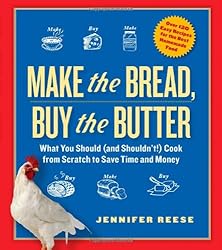
This a follow up review to one I made when I first read this book in 2014. However, I had not made anything from this book.

I still find it useful even though the costs and availability do not apply to my country or growing season. However, I really enjoyed reading about Reese’s experiments. She offers some very basic and classic recipes (pasta making, sauces, etc.) to some less typical ones (salted pork, cured salmon).

Furthermore, the author is basically one of us. Most of the recipes in this book come from other cookbooks she’s owned or read. She tested their recipes. I really like that aspect of it.

Continue reading →

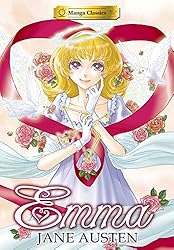
This manga took me a bit too long to read because I find it hard to watch Emma be so very wrong in visual form. There is a lot second hand embarrassment knowing how blind Emma is through most of this book with respect to the characters. It is understandable given her background, but it’s still hard to read through in comic form.

It is a fun manga adaptation as with the Pride and Prejudice one. If you enjoy both Austen and manga, then this a nice way to pass the time.

I would like to still say that the best Emma adaptation is BBC’s 2009 version.

Read February 18 – March 2, 2016.

Movies In Theatres

The Monkey 2 in 3D (16 02 2016) – My Dad wanted to see this when he heard it was screening in our town. He and I have not seen a movie since the 1990s. We went on the night after a snow storm had dropped 50cm. The cinema was not empty, but our theatre only had three other people in it which I had foreseen, snow storm or no. I don’t like 3D and it did not add much to this movie either. It was an OK movie. The stories are from my own childhood and so interpretation has varied. I found the monkey character slightly too muscular oddly enough. I guess I’m use to the leaner renditions of the monkey. Gong Li was very pretty.

Movies at Home

Out of Sight (03 02 2016) – Why can’t JLo be in good things like this anymore? The chemistry she had with George Clooney in this was stellar. I am surprised they haven’t been paired together again. Great cast all around and plain ol’ fun. I’d definitely rewatch most of it except Don Cheadle’s gang parts.

Mr. Robot (Feb 3-5, 2016) – I had heard a lot about this show when it was airing last summer, and I kept seeing Rami Malek photos. He is photogenic and has a certain quality about him. There is something mesmerizing about him. He’s amazing in this and deserved all the praise. I really hope he gets more high profile roles. The soundtrack is one of the best I’ve heard from a TV show. Let’s get with the Positives: Rami’s acting; the music; the female characters and their interactions with one another; interesting shooting style; a couple of twists; Tyrell and Joanna for the most part and general creepiness. Christian Slater is decent, not fantastic. Writing is fine. Not-So-Good: Angela’s storyline; drug dealer storyline; how Tyrell and Joanna’a storyline ended, and the finale was a bit anticlimactic. It was a good show and very addictive. I adore Rami, but I don’t necessarily feel this should be watched by everyone. Watching the show makes you very paranoid though. It is very creepy.

The Good Wife (Feb 9-19 , 2016) – See here.

The Duchess of Duke Street (Feb 18-27, 2016) – A 1970s period piece show I knew almost nothing about before I started it. This is an enjoyable show. The protagonist Louisa Trotter (née Leyton) can be an abrasive and blunt character, but somehow Gemma Jones gives her enough pathos, charisma, and vulnerability to make you root for her every time. I admired the character actually. I think the show was best when it was focused on Louisa’s life especially the romance and relationship with Charlie. I loved how the show was able to convey their relationship over years and the impact they had on one another. There was that one strange episode which was basically Jane Eyre, but otherwise, I adored this show. I wish I had someone to share it with.

This post contains majors spoilers for The Good Wife.

Continue reading →

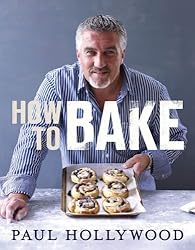
This is the first of three Paul Hollywood books I will review. As someone who loves baking, most of my cookbooks are focused on baking from the sweet to savoury to bread. This book covers that. It is the British edition of the book which I ordered from Book Outlet. I do prefer the UK editions of cookbooks.

What is a bit inconvenient is that Hollywood loves Stilton cheese which I can’t eat due to a penicillin allergy. Époisses cheese is featured once in this book too and it is hard to source here. As a UK book, there other things such as apricot jam, glace cherries, and dried peel. The pies and tarts section is more British as well. I love British baking so I adapt and substitute when necessary.

This book is suitable for novices, but it has recipes and sections for more adventurous bakers. There are sections for Sourdough and Pastries. My relationship with the former is contentious and most of the sourdough recipes makes 2 loaves which is too much for me. There are recipes for croissants, danishes, and brioche. I’ll tackle the brioche one day.

There are couple of non-baking recipes such as those breads or “bakes” you can make on the stove: chapatis, crumpets, and pancakes. On the whole, I’d recommend this for bakers who are keen on breads and expanding their repertoire. It’s not a cookies/biscuits kind of book. None of Hollywood’s books are. They are a bit more advanced than some standard cookbooks.

This was my first Hollywood book and I continue to love his cookbooks from the photographs, instructions, and to the binding.

Prose and Writing: Each section has an introduction page which gives some good pointers. Every recipe has a little blurb which not extremely useful, but nice. Hollywood is not super effusive in his writing.
Technique and Teaching: Lots of information for bakers with a bit of experience. He teaches various bread shapes: plaits, spirals, loaves, couronnes, and so forth. I’ve learned many bread and baking tips from Paul Hollywood including kneading with oil and simple things like how to mix, what tools to use, etc.
Photography and Layout: This book stands out because of the instructional photos. Great photography all around.
Other Book Notes: I really liked the overall binding of this book. It’s a hard cover, but Hollywood’s books tend to be less glossy and lighter.
Usefulness Factor: 5/5. If you’re serious about baking, bread, and viennoiseries, this a useful book.
Inspiration Factor: 4/5. Croissants and Danishes!
Recipes Tested:

  • Focaccia – Amazing. As if you bought it in the store.
  • Cholla (Challah) – This book includes pictures and instructions on how to do an eight strand/plait. Very good challah recipe.
  • Scones – Uses bread flour which I’m not too keen on with scones. They are alright.

The Recipe:
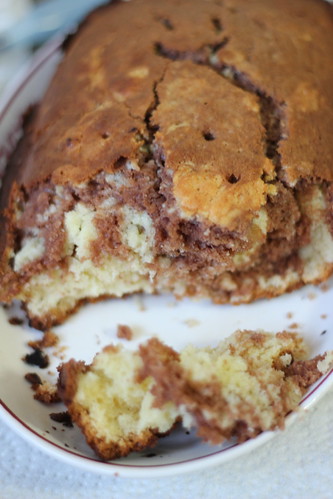
Marble Cake

Marble Cake

From How to Bake by Paul Hollywood and lovefood

  • 200 g (7.1oz) unsalted butter, softened
  • 200 g (7.1oz) caster sugar
  • 1.5 tsp natural vanilla extract
  • 3 large eggs
  • 250 g (8.8oz) plain flour
  • 3 tsp baking powder
  • 40 ml (1.4fl oz) full-fat milk
  • 2 tsp unsweetened cocoa powder
  • 1 cup icing sugar for dusting
  1. Heat your oven to 180°C. Line a 1kg loaf tin with baking parchment.
  2. In a large bowl, beat the butter, 180g of the sugar and the vanilla extract together until the mixture is light and fluffy. Beat in the eggs, one at a time, then sift the flour and baking powder over the mixture and fold in with 2 tbsp of the milk.
  3. Spoon two-thirds of the mixture into the prepared loaf tin – it should three-quarters fill the tin. Sift the cocoa over the remaining third of the mixture and fold in, together with the remaining 20g sugar and the last of the milk.
  4. Spoon the chocolate mixture over the cake mixture in the tin, then run a fork through both mixtures, gently swirling the two together to create a marbled effect.
  5. Bake for 55-70 minutes, until the cake shrinks slightly from the sides of the tin and a skewer inserted into the centre comes out clean, testing the cake after 55 minutes. Remove the cake from the tin and leave to cool on a wire rack. Once cooled, dust with icing sugar.

Recipe Review: While still good, this is not one of the best recipes in the book.

A 1kg loaf tin is 2lb loaf tin or by some sources, a 9×5. I have an 8×4 metal tin and a 10×6 silicone loaf mold. I used my 10×6 silicone loaf mold which makes the cake batter more shallow. In Hollywood’s Bread book, he writes that a standard 1kg loaf tin is about 27cm x 13cm x 7.5cm which would make it almost a 10×6. To be safe, I increased the temperature by 25 degrees and decreased the baking time. I checked it around 33 minutes because of the smell. It was not done, but it was done about ten minutes later. I really like using the silicone mold because I don’t have to grease it or use parchment paper, but it throws off the baking time and makes loves lower than they could be. I need to buy a 9×5.

This recipe required a lot of beating which was good for the workout. Sugar was 160g or 15g for the cocoa portion. I found it hard to marble though which is why my loaf ended up looking ugly.

Taste was good and if I kept the sugar at 200g, it would still have been alright since I think Hollywood’s recipes are less sweet than some others. This recipe was for the most part easy and I did enjoy the result. Unlikely to make again, but I still adore this cookbook.

ETA: Four days later and I have to say that I gifted some of the loaf to my parents and as they ate through it, the marbling got better. Taste was still good within the first three days too. I’d make the loaf again actually, but using a hand mixer next time.
Like many others, I became more interested in Intermittent Fasting (IF) after watching Dr Mosley’s BBC Horizon programme on it. I began to realize that this would be the only diet that I could ever do. It’s more of an eating pattern, but it is one that I can relate to. I do believe people eat too much in the West and especially junk or processed food. Food is everywhere. It’s excessive.

This “diet” is straightforward and easy to follow. Two non-consecutive fasting or low calorie days per week. The rules are simple and you can eat anything on the non fast days. The studies are showing

I do love food. I think about it a lot. I make it. I read about it. I watch shows about it. I also can and do eat a lot of it. However, I have done variations of IF or calorie restriction before. When travelling, I often go through hours without eating much. I often do not eat lunch. For breakfast, I often have a simple steel cut oatmeal breakfast. I do not mind it actually and love oatmeal as breakfast. On weekends, I will often brunch and have bigger meals with family or friends.

In the past, when I have done IF without even realizing it (travelling, as a poor graduate student, as a poor intern), I did did lose weight. I am not sure if there were other effects. I do not need to lose a lot of weight to begin with, but it is getting harder to lose weight over the years.

This book could be shorter as the second half is full of reference information. IF and the Fast Diet is fairly simple to follow. The book was a good reminder of eating less at least a couple days a week. I hope to fast more in the future. Due to circumstances, I can’t follow the calorie restrictions, but it is a good reminder to eat less on certain days.

Read February 11-13, 2016.

<< previous posts || next posts >>