You, um, may have noticed that the Olympics are going on right now, so that’s the genesis of this week’s question, in two parts:

First:

  • Do you or have you ever read books about the Olympics? About sports in general?
  • Fictional ones? Or non-fiction? Or both?

And, Second:

  • Do you consider yourself a sports fan?
  • Because, of course, if you’re a rabid fan and read about sports constantly, there’s a logic there; if you hate sports and never read anything sports-related, that, too … but you don’t have to love sports to enjoy a good sports story.
  • (Or a good sports movie, for that matter. Feel free to expand this into a discussion about “Friday Night Lights” or “The Natural” or whatever…) – BTT

I have never read any books about the Olympics, and I do not read a lot of books on sports in general. The one I can remember off the top of my head and that I liked quite a bit is Nick Hornby’s Fever Pitch. I do consider myself a sports fan in the sense that I like spectating sports, but I do not have any strong loyalty to any teams or countries. To some, but not to the level that most fans of. I would also like to read Friday Night Lights and have been meaning to since the television show began as I hear it is a good sports story. I rather like nonfictional sports books it seems.

As for the Olympics, I have been watching it and keeping up with it for many years.

Essays in Love / On loveAlain de Botton’s book of essays on love and romance written in novel prose about an unnamed narrator in the beginning to the end of a romance. When I started the book, I found out that it is on Peter Boxall’s 1001 Books to Read Before You Die. That was a pleasant surprise, and it is nicely unconventional to be put in on the list. While is technically fiction, it really is a book of essays in an unconventional format. I have read de Botton’s The Art of Travel and found his subdued, analytical writing style and subtle humor very comfortable to read. The book works for me completely because I am a romantic and philosophical. I found myself relating to it such as Number 17 in False Notes discusses a lover’s view of their partner compared to the family/parents view of them, and I think this is very true and honest especially in my case. In family, I seem to be viewed as this other person compared to the world. It also has the aforementioned humor which involves diagrams, equations, and other sly random funny bits. I liked this, but then again, I think the style, essays, and romanticism worked for me personally that may not interest others.

It was a really productive reading week. I finished five books this week: The Name of the Rose, When You Are Engulfed in Flames, Petite Anglaise, The Memoirs for Sherlock Holmes (review will be combined with The Hound of the Baskervilles), and Breaking Dawn (I do not plan to write a review).

I am rather pleased with myself because a couple of the books were due two days before I read them, and I did not think I would make it. If I had set aside whole days to reading (pure bliss) which is what I did tuesday, I can deftly finish and start books. I am constantly amazed and pleased how my reading speed has quickened since I was a teenager. While I do not calculate how long it takes me exactly to finish a book then and now (it does depend on the book), I definitely do see differences between myself now and ten or five years ago. How about you?

Today, I am reading Alain de Botton’s Essays in Love (On Love) and listening to The Hound of Baskervilles. Later this week, I plan to start Hardy’s Far From the Madding Crowd and one of the many books I have from the library. I got a slew of Booker prize winners lately.

It’s going to be more overwhelming as the month ends and September begins. My hobbies are even overwhelming me. In the good way though.

Have a good week.

Literary Links:

The Times has a list of 50 outstanding literary translations of the last 50 years.

International Organisation of Book Towns

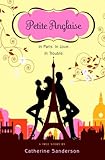
I have a bit of a history of reading expat memoirs, and France is a popular place for expats to write about. One of my favourite expat memoirs is Paris to the Moon. In fact, I think I’ve read more memoirs of living in Paris than any other. Which is to say probably a handful. I think it’s mostly a habit now that if I hear of a decently written memoir about living in France, I’ll read it. It’s very easy since many expats write about France very well and very easily. While I am an anglophile, it can easily be said I am a francophile as I am semi-fluent in French. Though the reason I picked up this book was not only because it was an expat memoir, I knew of Petite Anglaise, as with many people, through her blog. I read it first in 2005 or late 2004 (definitely before she left Mr. Frog). While I was never a regular reader or commentator on her blog, I remember reading several of the posts and comments alluded to in the book. Even in blog format, I admired her openness in writing for her life. While I have had personal blogs over time, my visitor page was never a smidge compared to hers nor have I had the relationship rollerocaster, I could not be as open as she was in the blog. It is funny reading the book with things you’ve read about online or in a blog. It seems to be another perspective, and indeed, Catherine Sanderson seems to differentiate herself and Petite. I enjoyed this memoir because the question is elicits in personal blogging. How much do we or should we reveal? Do a lot of us blog when we are unhappy as a creative and cathartic outlet? For me, it’s fairly true because for many years, this domain has hosted a more personal blog (which is still here, but not been updated for more than a half year) in which I detailed many years of anxiety and doubt. Overall, I like how this memoir posed these questions about online dating, personalities or public writing. I think Sanderson writes in a clear style and voice.

Are there any particular worlds in books where you’d like to live?
Or where you certainly would NOT want to live?
What about authors? If you were a character, who would you trust to write your life?
(This came to me when reviewing a Jonathan Carroll book – I’m not sure I’d like to live in the worlds of his books.) – BTT

Worlds I would like to live include Philip Pullman’s parallel world where daemons exist, Jasper Fforde’s Thursday Next series (oh to be a jurisfiction agent), Madeleine L’Engle’s Time Quartet, and of course, JKR’s Harry Potter, and probably quite a few more. When I was a child, I was constantly looking for closets that go into Narnia; I wanted to be Lucy. I also really wanted to be Wendy Peter Pan.

I definitely would not want to live in any dystopia books such as 1984, Brave New World, Blindness, or Fahrenheit 451. There are also a few classic authors whose works I would not want to live in such as Thomas Hardy, Dosteoyevsky, Edith Wharton, E. M. Forster, sometimes Dickens, and sometimes Shakespeare (tragedies only)

Authors I would trust for my life: Jane Austen, Philip Pullman, Shakespeare (comedies only), and Neil Gaiman (because it would be really cool).

My first David Sedaris book. It was very funny and a quick read; I think it only took me half a day of solid reading. I laughed out loud a few times, and I loved Sedaris’s style. There are quite a few essays in this, a couple on his childhood and youth, a few on living day to day, people, and one large one at the end on quitting smoking and moving to Japan for a couple months to accomplish it. One nifty thing was the following quotation: “There’s a store in London that sells travel guides alongside novels that place in this or that given country. The idea is that you’ll read the guide for facts and read the novel for atmosphere” Which is something I mentioned on the previous Sunday Salon and funnily enough, I am going to London. I thought this a fun read, and definitely right up my alley in terms of humor. I find things easily amusing and strange as Mr Sedaris does. I look forward to reading some of his other books and essays in the future.

Lately, I have been reading very many mysteries. I have been going through the Sherlock Holmes canon and now this. The Name of the Rose on the surface is a medieval murder mystery. As a student of history, I have never been a big fan of the medieval ages in Europe. It’s very dark, violent, and sparse on the artistic movements. The religious tensions and politics does not interest as much as some other historical periods. It was one of the reasons the book was not easy to get into because of this. Though, I found it a very astute and accurate portrait of life in the late medieval ages, eliciting the right tensions, debates and monastic and religious lifestyles. It seemed so realistic to me even with sensational murders; Eco captured the tone and atmosphere meticulously. I did like the characters overall. I was fascinated by Brother William (the detective) and Brother Adso, the Watson to his Holmes. Indeed I am coincidentally reading The Name of the Rose while I go through the Holmes canon, and Eco obviously drew on Conan Doyle. Brother William is based on Sherlock and is even from a place called Baskerville. I also like the idea of a mystery set around and about a library and books. This book has a lot of facets both religiously, philosophically, symbolically, and more. It is not the easiest to analyse at times, and I only realized that in the later pages how obviously post-modern it was. I think I read too many “modern” post-modern books and am not use to reading post-modern books set in the past. The plot itself was not simple, but the book’s themes and discussions are what make it distinctive. I hear that Eco’s follow up work Foucault’s Pendulum is more difficult to read, and I think I will take time before reading Eco again. He requires much analysis and reader concentration. A complex, interesting read.

Modern Times (01 07 08) – Finally, I get to see this after having seen most of his other major films. I liked it, though I think City Lights is still my favourite. I particularly like the department store scenes with him roller blading around.
Then She Found Me (04 07 08) – I will always know Helen Hunt as Jamie from Mad About You. The film was alright. Colin Firth is too attractive for his own good even as a not-suppose to be sexy single father. Bette Midler is amusing.
Half-Nelson(08 07 08) – The plot was much slower than I anticipated, but then again, I didn’t really watch this for that as Ryan Gosling just captures me on screen. Damn he is talented. I always get this weird sense of watching him because I remember his earlier TV days so well. He is so talented and good in this.
Psycho (13 07 08) – Very well done and entertaining. Even as a someone who watches lots of classic films, I managed to remain unspoiled for this making the reveal good. Hitchcock at his best, but I love lots of his other stuff as well (The 39 Steps is underrated). It really is a classic in the truest sense of the word.
Les Demoiselles de Rochefort (The Young Girls of Rochefort) (29 07 08) – I quite adore Les Parapluies de Cherbourg, and this film is just not as superior as that. It has too many characters and the plot seems not as cohesive or stands out to be special. I like that there is more dancing. There is even Gene Kelly! It had Jacques Demy’s characteristic crazy colour schemes, attention to detail and his vision.

Total: 5.

Presently, it is past 3AM and I am having a rare case of summer insomnia. I decided that I may as well send a few emails and write the Sunday Salon for today.

This week, I read only a tiny bit of The Name of the Rose. I like it, but I have been severely sidetracked by work and other things this week. I plan to read the book today (after I sleep that is), and start another one for variety, probably one of the nonfiction memoirs that is due this week from the library.

My library TBR pile is out of control again. As I mentioned last week, I have been going through a lot of guidebooks with reference to an imminent move I will make in the near future. Guidebooks do not necessarily need to be read from cover to cover, but I now have several novels set in this place (not excluding the couple that I own personally). While novels are not the best travel guides, I like the idea of preparing myself on a journey by reading fictional stories of people who live in this town as I will. Have you ever done this? Does it make it even more worthwhile for a trip or move?

I will end this insomniac edition of Sunday Salon with a quotation:

Books permit us to voyage through time, to tap the wisdom of our ancestors. The library connects us with the insights and knowledge, painfully extracted from Nature, of the greatest minds that ever were, with the best teachers, drawn from the entire planet and from all of our history, to instruct us without tiring, and to inspire us to make our own contribution to the collective knowledge of the human species. Public libraries depend on voluntary contributions. I think the health of our civilization, the depth of our awareness about the underpinnings of our culture and our concern for the future can all be tested by how well we support our libraries.” — Carl Sagan, Cosmos.

Here is to some sleep and lots of reading for the rest of Sunday. Have a good week, everyone.

I read 11 books. Crime and Punishment was the most cross posted of books, but I really need to make some other progress.

Current Challenges

Personal Challenges

  • 1001 Books You Must Read Before You Die – 87
  • TBR Books I Own Pile – 1: Crime and Punishment

Completed Challenges

What are your favourite final sentences from books? Is there a book that you liked specially because of its last sentence? Or a book, perhaps that you didn’t like but still remember simply because of the last line? – BTT

Having guessed this may be the theme this week, I remembered I had a PDF file from American Book Review for the 100 Best Last Lines from Novels (pdf). Once again, here are some I like only books I have read:

“…all human wisdom is contained in two words- “wait” and “hope.”” – Alexandre Dumas, The Count of Monte Cristo

“Before reaching the final line, however, he had already understood that he would never leave that room, for it was foreseen that the city of mirrors (or mirages) would be wiped out by the wind and exiled from the memory of men at the precise moment when Aureliano Babilonia would finish deciphering the parchments, and that everything written on them was unrepeatable since time immemorial and forever more, because races condemned to one hundred years of solitude did not have a second opportunity on earth. –Gabriel Garci?a Ma?rquez, One Hundred Years of Solitude

“Lastly, she pictured to herself how this same little sister of hers would, in the after-time, be herself a grown woman; and how she would keep, through all her riper years, the simple and loving heart of her childhood; and how she would gather about her other little children, and make their eyes bright and eager with many a strange tale, perhaps even with the dream of Wonderland of long ago; and how she would feel with all their simple sorrows, and find a pleasure in all their simple joys, remembering her own child-life, and the happy summer days.” –Lewis Carroll,
Alice’s Adventures in Wonderland (1865)

“Are there any questions?” –Margaret Atwood, The Handmaid’s Tale

“He knelt by the bed and bent over her, draining their last moment to its lees; and in the silence there passed between them the word which made all clear.” –Edith Wharton, The House of Mirth

“But that is the beginning of a new story—the story of the gradual renewal of an, the story of his gradual regeneration, of his passing from one world into another, of his initiation into a new unknown life. That might be the subject of a new story, but our present story is ended.” –Fyodor Dostoyevsky, Crime and Punishment

The following three quotations are all really similar:

“I took her hand in mine, and we went out of the ruined place; and, as the morning mists had risen long ago when I first left the forge, so, the evening mists were rising now, and in all the broad expanse of tranquil light they showed to me, I saw no shadow of another parting from her.” – Charles Dickens, Great Expectations

“He smiled and took her hand and pressed it. They got up and walked out of the gallery. They stood for a moment at the balustrade and looked at Trafalgar Square. Cabs and omnibuses hurried to and fro, and crowds passed, hastening in every direction, and the sun was shining.” – William Somerset Maugham, Of Human Bondage

“The world was all before them, where to choose
Their place of rest, and Providence their guide:
They, hand in hand, with wandering steps and slow,
Through Eden took their solitary way.”
– John Milton, Paradise Lost

I seem to have forgotten about Shakespeare last week:

“The weight of this sad time we must obey,
Speak what we feel not what we ought to say.
The oldest hath borne most; we that are young
Shall never see so much, nor live so long.”
– William Shakespeare, King Lear

“Gentle breath of yours my sails
Must fill, or else my project fails,
Which was to please. Now I want
Spirits to enforce, art to enchant;
And my ending is despair
Unless I be relieved by prayer,
Which pierces so that it assaults
Mercy itself and frees all faults.
As you from crimes would pardoned be,
Let your indulgence set me free.”
– William Shakespeare, The Tempest

“A great while ago the world begun,
With hey, ho, the wind and the rain;
But that’s all one, our play is done,
And we’ll strive to please you every day.”
– William Shakespeare,
Twelfth Night, or, What You Will

The first short story collection with most of the famous cases being detailed here. I can understand why many find the short stories better than the novels as a whole. Holmes is better is in short, small doses. He seems more humanized and emotional in these stories. Though he is still obviously cold and conceited, but more tolerably so. I really adored this collection. More than ever I think Holmes and Watson are the perfect duo. Holmes is sangfroid while Watson is affable and more socially reasoned. Though, Conan Doyle definitely has themes, and my excessive reading and tv and movie watching have enabled me to predict the real culprits of his mysteries more than once. Also, he is a bit of a formula because in this collection, there is not one, but three short stories of crazy fathers or stepfathers. The repetition does not bother me, I rather like reading the Holmes’s methodology of reaching it. I have already started the next in the canon and will finish the series before the end of next month I expect.

<< previous posts || next posts >>