Books Read: 0
Currently on: p. 100 of Beloved

Vasily has a mini challenge of selecting a favourite book and posting a favourite quote from it.

howards end

“If we lived for ever, what you say would be true. But we have to die, we have to leave life presently. Injustice and greed would be the real thing if we lived for ever. As it is, we must hold to other things, because Death is coming. I love Death–not morbidly, but because He explains. He shows me the emptiness of money. Death and Money are the eternal foes. Not Death and Life. Never mind what lies behind Death, Mr. Bast, but be sure that the poet and the musician and the tramp will be happier than the man who has never learnt to say ‘I am.'”
–E. M. Forester, Howards End

Reading Progress: p. 28 of Beloved, Chapter 3.

Not much has gone on, just reading and drinking tea. Will make more tea as I will need the caffeine. I have ten varieties of tea and at least three varieties of hot chocolate. I would like to take a walk, but the weather is a bit wet today. It has already rained and it may rain again. Maybe in the evening I’ll take a short walk around the neighborhood.

I own Beloved having bought it four years ago in China of all places. Apparently China doesn’t censor literary and dark novels about slavery, race and memory. This is also my last book for the Book Awards Challenge, and one book off my official TBR 2008 pile since it is one of those many books that I own but have not read. It has some interesting prose so far even if the story and characters are sad.

Book and Page Progress: 0

In hour one, I did not read because a friend called. She does not call often and needed consolation. That took up most of the hour, and then I washed the dishes from lunch, made tea, and now I am starting Toni Morrison’s Beloved. I will be reading this for awhile.

Nymeth has a mini challenge about reading a web comic. I decided to read some Slow Wave which is a webcomic with dreams that are submitted from users. I remember reading this comic years ago, and found it fascinating as a person who remembers and lucid dreams. I am constantly entertained by my own dreams and by those of others so having it in webcomic is fun.

Now, I really must do some reading. Will be back at the top of the hour for Hour 3.


A little more than an hour until the Readathon kicks off. There is a charity for this readathon and please donate to Reading Is Fundamental (RIF) if you can. It is a an organisation that provides children with books. Darcie has posted a meme.
  
Where are you reading from today? Home in Ontario, Canada.

3 facts about me …

  1. I have participated in the previous Readthon and years ago, did the 24 hour Blogathon raising money for MSF/Doctors Without Borders.
  2. I always have too many books unread, too many movies unwatched and too much yarn in the stash that has to be knit. I aquire all these things much faster than I can consume them.
  3. I am a multitasker except when I am not. Here is a list of other activities I will be performing in the 24 hours other than or while reading:
    Writing reviews
    Knitting
    Taking a walk/exercising
    Sleeping (It is likely I will sleep at least 3 hours in the night)
    Listening to music
    Watching an episode of a TV show
    Eating and Drinking caffeine
  4.  
    How many books do you have in your TBR pile for the next 24 hours?

    I have picked 11 books for the readthon pile, but there are obviously four times as many books I could be reading. Here they are, the further you go down the list, the less likely I’ll actually be touching the book throughout the day.

    Beloved by Toni Morrison
    The Complete Persepolis by Marjane Satrapi
    My Sister Life and Other Poems by Boris Pasternak
    The Life and Times of Thunderbolt Kid by Bill Bryson
    Summer by Edith Wharton
    Promothea Book 1 by Alan Moore, et al.
    Paroles par Jacques Prevert
    The Minority Report and other classic stories by Philip K. Dicl
    The Two Towers by J. R. R. Tolkien
    The Partisan’s Daughter by Louis de Bernieres
    Ex Libris by Anne Fadiman

    Do you have any goals for the read-a-thon (i.e. number of books, number of pages, number of hours, or number of comments on blogs)?

    I just want to finish at least a few books and catch up on my challenges. I’m fairly simple with this readathon.

    Any advice for people doing this for the first time? 
     
    Take breaks. Read short books. Exercise. Do other things. Have fun.
     
    —
    On a final note, also please contact me, using comments or the contact form because I am online all during the readathon on AIM, Google and Yahoo messengers.

    Have a good time everyone!

What, in your opinion, is the definition of a “reader.” A person who indiscriminately reads everything in sight? A person who reads BOOKS? A person who reads, period, no matter what it is? … Or, more specific? Like the specific person who’s reading something you wrote? – BTT

When someone proclaims that they are a reader, I infer that the person reads a lot of books or periodicals frequently and enjoy it. I tend to relate it to a hobby so people who use the term mean they enjoy it. I guess some people can say that a reader is just someone reads whatever, but most of us in the Western world are literate, and those who enjoy it or do so often enough can be considered readers. My definition of it is a bit broad.

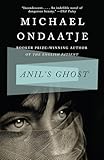
A Giller Prize and Governor General’s Award winner, Michael Ondaatje weaves a story about Anil Tissera, a Sri Lankan who has studied and relocated abroad, returns to her native country as a forensic anthropologist sent by an international organisation on a human rights investigation amidst the violent civil conflict. She becomes embroiled in the unsafe political climate, trying to solve the mystery of a skeleton while rediscovering her personal history.

Many years ago, I read The English Patient. While I found the prose very nice at times, I did not feel for any of the characters or were particularly enchanted or engaged with them or the story. Like in TEP, Ondaatje shifts between narratives, flashbacks and perspectives in this book. It is his trademark non-linear prose style. Scenes are revisited more than once and dispensed later as if in memory of conversations past. Going forwards and backwards like short stories or vignettes in the novel. People in or affected by conflict seems to be a theme of his, such as World War II in TEP or the Sri Lanka civil conflict in this novel. The internal emotional life and identity affected by the external, violent conflicts, and there are many strangers amidst the confusion. I have noticed also that both books include people who have extramarital affairs and lost loves.

Sometimes I felt I was watching the characters through a screen or a gauze. I saw them move, but I couldn’t quite get the feel of them or who they were. There were a few moments, I liked, but overall, I still have not warmed to Ondaatje’s style. He introduced too many characters, and the plot suffers as a result. Being a character novel would be fine, but I was apathetic towards most of the characters. The book was slow even if it did not take me long to read. I think the book has some interesting themes, but falls short in pacing, plot and certain characterizations.

This week, I read Gilead, Once Upon a Time in the North, The Geography of Bliss, and Anil’s Ghost (review up tomorrow). My review for Best American Travel Writing 2007 also went up.

Today, I am reading William Shakespeare’s Sonnets and I will begin Morrison’s Beloved. I will also start Boris Pasternak’s poetry with My Sister Life and Other Poems.

I have read quite a bit of nonfiction this month, and the transition was noticeable when I finished reading Gilead which is quite literary. I find going from fiction and literature to nonfiction easier than the other way. I wonder why that is, but it is true that there is a marked difference in the style of the writing especially since I will be reading more poetry this week. I always attempt to have a wide variety of prose and poetry in my reading habits. I am quite pleased I have been reading more nonfiction lately.

Actually, June and May have been good reading months. I have been on a downward curve in number of books read since 2004, and I will definitely read more than I did last year. It’s not so much that I am reading faster now, but I have been able to make time for books again. The reading challenges do help. Though I think I will join less challenges in the future. It is becoming harder to predict what I will read and when. Even if I do manage to read more books this year, every year, I become unsure though reading will always be in some way central to my life. My biggest and main hobby in life even if I do manage to read a sliver of what I read years ago.

Have a good week!

Literary Links:

Lit 101 Classics in Three Lines or Less – Brilliant.

Zoomi.com and Zoomi.ca – I don’t personally buy a lot of books online, but this website makes browsing Amazon.com books more fun.

EW’s 100 New Classics: Books – I actually agree with a few of these.

The Geography of Bliss: One Grumps’ Search for the Happiest Places in the World by Eric Weiner is his voyages for happiness and the meaning of it. He travels to ten countries finding how what makes us happy and what makes us miserable. The countries as follows in the book: The Netherlands, Switzerland, Bhutan, Qatar, Iceland, Moldova, Thailand, Great Britain, India, and America. The happiest place seems to be Iceland, and I found myself relating to and fascinated by the Icelandic approaches to life. The book is well researched and there are many discussions and threads on happiness, its relation to trust, envy, choices, productivity, society, individuality, altruism, spirituality, and more. There are lots of quotations from philosophers, writers, scientists, and the intriguing people he interviews. I noted many of them in my tumblr blog; I have a thing for quotes. It was insightful, amusing, and enlightening. As with many travel books, there were stories of many people of different walks of life and as a journalist, Weiner takes them all down deftly and expertly. Also like a journalist, he was personal without being overly so in the memoir portions of the book. I quite like this book, finding it thought provoking and something necessary to my own contemplations about what makes us happy or at least content. It is a fascinating topic, and mixed with the ideas of culture and geography, it can open ideas of how we all lead lives. I do not think it is a self-help book, but definitely consider it a more philosophical travelogue. Recommended.
 

A prequel novella to the His Dark Materials trilogy. The story features on a young Lee Scoresby and his daemon Hester on a trip to the north where they first meet Iorek Byrnison. It is set more than thirty years before Northern Lights/The Golden Compass. This book is only of interest to those who have read Philip Pullman’s trilogy and is especially delightful to those of us who love the Lee and Iorek characters. I can recognise Pullman’s distinctive storytelling style; this little book had airs of his Sally Lockhart trilogy as well. The book also includes engravings by John Lawrence. I actually like engraving art and wish there was more of it now. The story is still full of fascinating things about the HDM universe; I always find the daemon idea fascinating. As usual, Pullman entertained and delighted me. Quick and speedy read at 95 pages.

Think about your favorite authors, your favorite books . . . what is it about them that makes you love them above all the other authors you’ve read? The stories? The characters? The way they appear to relish the taste of words on the tongue? The way they’re unafraid to show the nitty-gritty of life? How they sweep you off to a new, distant place? What is it about those books and authors that makes them resonate with you in ways that other, perfectly good books and authors do not? – BTT

It would be too long to list all the books that I like, but in general, I do like style, prose and those who can be literary and wise. As a result, I like a lot of classics. I also like stories which I can be involved and swept away. I am an escapist and read books that take myself away from the setting or distorts reality (yes, I am one of those people who likes magical realism). I like reading fantasy and travel books as well as books that reflect the “nitty-gritty”.

It’s true that I often like the characters. For a lot of my favourite books, there are characters I would like as friends, but there are equally characters I like because I am deeply fascinated by or I can see myself reflected in them. Though, I don’t always feel for the characters. Sometimes the writing is so excellent, I love the prose, story, and the themes more than the characters.

I like introspection from authors where they do talk about society and life. Authors who are on the poetic side also enchant me. The best books are the ones in which I can see myself rereading because not only is the author excellent, but the words are beautiful and they speak volumes about important things in life. It’s usually a mix of all the above or most of the elements that I can reread again. I like books that are funny and amusing as well as candid and true.

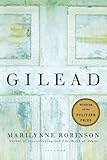
This Pulitizer prize winning book by Marilynne Robinson is the definition of modern literary novels. The novel does not have much in the way of plot. It is an epistolary novel of an old man writing for his very young son about his life. It is extremely introspective and beautifully written. I do not think it is for everyone, but I could relate to it because I am like the character and the style. It is not to say that I think as the character does all the time, but I certainly do understand why they mean with lines such as this:

I don’t know why solitude would be a balm for loneliness, but that is how it always was for me in those days, (p 18-9 hardcover)

It is the kind of book I can see myself rereading because it reminds me of so many things of myself and my inner world. It is introspective and reflective, spiritual and pensive:

Our dream of life will end as dreams do end, abruptly and completely, when the sun rises, when the light comes. And we will think, All that fear and all that grief were about nothing. But that cannot be true. I can’t believe we will forget our sorrows altogether. That would mean forgetting that we had lived, humanly speaking. Sorrow seems to me to be a great substance of human life. (104)

Such passages like this are why I would not recommend it to everyone. It took me awhile to read this book because I knew how reflective of myself it was, and how moody I was to avoid such deep thoughts. Many people, even bibliophiles would not necessarily enjoy this book. It is not everyone’s book of tea especially since it does talk of faith and God, but not necessarily in an obtrusive way. I think it would vary for each individual’s faith. Here a particularly spiritual passage:

Calvin says somewhere that each of us is an actor on stage and God is the audience. That metaphor has always interested me, because it makes us artists of our behavior, and the reaction of God to us might be thought of as aesthetic rather than morally judgmental in the ordinary sense. How well do we understand our role? With how much assurance do we perform it? I suppose Calvin’s God was a Frenchman, just as mine is a Middle Westerner of New England extraction. Well we all bring such light to bear these great matters as we can. I do like Calvin’s image, though, because it suggests how God might actually enjoy us. I believe we think about that far too little. It would be a way into understanding essential things, since presumably the world exists for God’s enjoyment, no in any simple sense, of course, but as you enjoy the being of a child even when he is in every way a thorn in your heart. (124-5)

I have quoted from the book so much in this review because I really love and can relate to the words, prose, and style so much. The tone is like my own when I write in my journal, but obviously not as well written. I think there a few people who can appreciate such a work, but they truly will if they read it. It’s not for everyone, and I am one of those reviewers who ultimately review for myself so I would not recommend it at all if you do not think you can enjoy an introvert’s novel. I do want to reread this again which says enough about how much I like this book.

Here are some more exerpts:

When I’m up here in my study with the radio on and some old book in my hands and it’s nighttime and the wind blows and the house creaks, I forget where I am, and it’s as thought I’m back in the hard times for a minute or two, and there’s a sweetness in the experience I don’t understand. But that only enhances the value of it. My point here is that you never do know the actual nature even of your own experience. Or perhaps it has no fixed and certain nature. (95)

Remembering when they said what they did about looking in windows and wondering about other people’s lives made me feel companionable with them. I could have said that’s three of us, because as the Lord knows, for many years I did exactly the same thing. (202)

Oh!, I will miss the world! (115)

My favourite travel essay anthology series. Okay. The only travel essay anthology series that I read. Still, I’ve read every book in the series since 2002. I enjoy each one immensely. Some stories are more memorable than others, but each guest editor deftly chooses some gems and amazing stories from the lands afar. I love travel writing due to my incessant escapism so these stories are the best from periodicals and the like. In the 2007 edition guest edited by Susan Orlean, there is the story of Tokelau and its referendum for nation building in the South Pacific, Djibouti and its national addiction to khat, an idyllic walking holiday in the south of France, a particularly long article on mysterious and perplexing Libya, and more. This is not much of a review because I find that I consistently like each volume in the series which has humor, horror, romance, and travely self-discovery. I recommend the series as a whole.

<< previous posts || next posts >>