Posted on December 16, 2007 in Food

This cake is gooey, cinnamony, and chocolately. It could be eaten as a coffee cake for tea or snacks, but it could be a small birthday party cake as well. For people like my Dad who do not like chocolate, raisins could probably be used instead. It’s a little bit of work to separate the eggs and layer the cake, but I think it’s well worth it.
Continue reading →
Posted on December 13, 2007 in Food

I made this gingerbread loaf last Christmas. It’s a great alternative to gingerbread cookies, but I did grow up with ginger, hard for me to hate. This recipe was given to me by a friend, and she’s been using it for years. I do not know where I got it, but it is delicious. The texture is a cross between bread and cake. It was soft, but not too moist. Nice firm and delicious exterior. We used the square pan instead of a loaf pan, and we had to take it earlier than described. Easy and good.
Posted on December 10, 2007 in Books, Food, Travel
 This was suppose to be read for the In Their Shoes memoirs/bio challenges, but I got it from the library early and couldn’t put if off til 2008. Besides, it’s more coffee table book than memoirs as it is full of pictures. I love Tony Bourdain since I read A Cook’s Tour years ago. This is a sortof companion book to his cable travel-cum-food show just as ACT was, but more on the photos though he does write some insightful things. He has a dream job of mine. He gets paid to write, cook, and travel. Bourdain writes in the book that the show and the photos give a taste and a view of the places. They never claim to show “the best of”, “the real” or “the comprehensive guide to” any destinations. I like that, and travelling and travel photography is often just that. The photos were taken by the crew of NR, and many are documentary style as a result. Quite a few photos seemed to have been taken by a camera phone. It isn’t just photos of course. Bourdain’s writing is genuine, sometimes crass, blunt, and as always, funny. There is commentary on the places he and the show have visited including the well documented time the crew were stuck in Beirut during the July 2006 Lebanon and Israel conflict. There are aso small sections on drinking, washrooms, chefs, places to eat (not a big resource, but solid nonetheless), hazards, tips, and equipment for the adventurous traveler. Enjoyable, quick read with some good travel insights and tips.
Posted on August 31, 2007 in Food

 To mark the end of summer, my friend and I decided to bake two different types of biscotti. We started with an chocolate almond biscotti and then moved onto this one. This was the favourite even though we liked the other one very much. I think the key to the great result is the constant mixing of the eggs and sugar, so use a mixer. Biscotti are great all year round, and these are particularly good during the holidays because of the cranberries. They often use little to no butter, and have a long shelf life. Great for tea parties, gatherings and gifts.
Posted on August 29, 2007 in Food, Photography

Posted on August 27, 2007 in Food

After a good workout, I decided to treat myself to a couple bites of 99% imported Italian dark chocolate from Muzzi, but what to follow that up with? My new fruit discovery of course: the prickly cactus pear.
Native to Mexico and Latin America, but also found throughout the United States, Africa and Asia, this cactus fruit has been consumed raw and in dishes for centuries. As the name implies, it grows on cacti, and has tubercles with small prickly spines on its skin. The ends and base of the pear has glochids which are even more nasty when attached to the skin.
One must be cautious, but it’s well worth to get the pear open as it reveals juicy, red fruit with tiny seeds. The seeds are edible, can be chewed or spit out and dried later (and ground into flour for baking). I prefer to swallow and chew them. It reminds me of other rouge inclined fruit such as the tomato, watermelon and pomegranates due to its juice and seeds. Did I mention it was sweet and delicious?
There are a couple of methods of opening up the fruit. You can steam it lightly for one which will help remove the spines and allow for easy peeling. Personally, I love to eat fruit by itself and raw as a snack or for dessert after a meal. We’ll put the pears under cold water in a bowl or under the tap (remember those gloves) which should despine somewhat. Dry them with paper towels, rubbing vigorously around to further get the remaining spines out. We like to cut the ends, as that is the most nasty part of the pear. Then, we halve the pears and enjoy in whatever manner. In our case, we just use a spoon to scoop the fruit out and into our anticipating mouths.

For more information…
Optunia (wikipedia)
Edible Cactus – Prickly Pear
Posted on July 20, 2007 in Food

Fresh rhubarb pie with a lattice top crust from scratch! Laborious and time consuming, but amazingly good.
Posted on July 10, 2007 in Food

Posted on June 13, 2007 in Food

My last attempt at ginger cookies left me dissatisfied, and I wanted them softer and more chewy.
Posted on May 18, 2007 in Books, Food
 The full title of this book is Heat: An Amateur’s Adventures as Kitchen Slave, Line Cook, Pasta-Maker, and Apprentice to a Dante-Quoting Butcher in Tuscany by Bill Buford. Without previous experience in the food business, Buford enters first the food and restaurant business in New York City by working at Mario Batali’s Babbo, and secondly a less capitalist view of food in Italy in the second half as the apprentice butcher. The book is funny, light and interesting. There are a lot of distinct characters in this book. The first half of the book draws similarities to Kitchen Confidential by Anthony Bourdain as it shows you the harshness that is the restaurant business. For my love of food, I have never wanted to be a professional chef or cook. My dad is a cook, and it was not a profession he chose for himself at first. He’s been doing it for thirty years, and he is very ready for semi-retirement. Knowing this, I became invested in Buford and felt good when he felt accomplished.
The book takes a different and dare I say, more introspective turn in the second half with the apprenticeship in Italy. Maybe it’s because I love travel books as much as food books or travel in general forces different perspectives for the writer, but there are even more unique characters and stories from Tuscany. The second half reads more like a Bill Bryson travelogue. I did enjoy Buford’s style, and the ending hints at a sequel in France. While Batali and a number of personalities in the book are anti-French, I’m a francophile so I very much excited at the prospect of reading Buford again en France.
Posted on May 15, 2007 in Food

Anything with chocolate makes me happy. I like my chocolate bittersweet and of good quality even in baking. This simple recipe can be whipped up relatively fast and with few ingredients.
Posted on May 2, 2007 in Books, Food
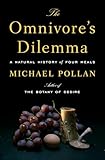 Reading about food is merging two of my loves together. This is the second food book I’ve read this year so far which is a lot considering I’ve only read ten books this year. George Bernard Shaw is quoted as saying that, “There is no sincerer love than the love of food.” I bake, cook when I can, and am a very adventurous eater. My love for food is great indeed, and it interests me greatly in many respects. This book was long, but very readable. It was informative, but with a genial style that most people can enter into. As a journalist, Pollan can engage readers while some academics would bore with their style about corn sex. Corn features heavily in the first section of the book. It’s fascinating to read the industry of food, and the impact of it on the environment, and the meaning of such words such as “organic” and “sustainable”. Much as Fast Food Nation did when I read it five years ago, this book made me question my eating habits, not only in a basic moral or scientific ways, but on a philosophical level. I enjoyed reading the author going back to the source of food through corn, grass, or in the woods when hunting a wild boar or foraging fungi. I think there is a viable narrative in this book that you may not get from most nonfiction books because I found myself wondering if I could hunt, really try vegetarianism, or trust corn or the word “organic” the same way ever again. My philosophy and views of food are quite in accordance to Pollan’s so it’s a bit preaching to the choir, but I loved the information I got from it and the personal account of his experiences.
ETA: Dewey has interviewed about this book on her site over here.